Most people expect a renovation to feel stressful because it’s disruptive. There’s noise, dust, constant decisions to make, and delays to work around – that’s usually what families brace themselves for. Here’s why renovations feel chaotic. But in my experience, that’s not what unsettles people the most.
The moments that really get under people’s skin tend to arrive quietly, often while everything still looks like it’s moving along as planned. The site is active. Trades are coming and going. Work is happening. Nothing feels obviously wrong.
And yet, something feels off.
You start wondering what’s happening next. Whether a delay matters. Whether a change affects something else. Or whether you were meant to make a decision earlier – and didn’t realise it at the time.
That feeling isn’t random – it’s your brain trying to fill in gaps it doesn’t have information for.
And that’s usually when people say they feel stressed – not because the renovation itself is difficult, but because they don’t know what to expect.
Over time, I’ve noticed that this feeling almost always comes from the same place. I think of it as the Silent Stressors – small moments of uncertainty that creep in long before anything actually goes wrong.
They’re easy to miss. But once they’re there, even minor things start to feel bigger than they are.
And the important thing to understand is this: these Silent Stressors form early and quietly, long before most people realise they’re there.
Silent Stressor #1: When You Don’t Know What Happens Next
The first moment stress usually appears is earlier than people expect.
It’s not when walls come down.
It’s when people don’t understand the rhythm of the job.
If you don’t know what’s coming next, every pause feels like a problem. Every change feels bigger than it is.
Timelines matter more than most people realise. Renovations will change – that’s expected. The problem is what people do when they don’t understand how a renovation normally unfolds. Without that context, people start protecting themselves early.
They:
- Pad the schedule
- Find somewhere to stay “just in case”
- Shift work hours or school runs
- And brace themselves for stress before it’s actually needed
That padding – the time and the worry – is a real cost most people never plan for.
When the stages are explained clearly, people relax.
When they’re not, even a well-run site can feel chaotic.
A lot of people feel this before work has even properly begun.
By the time people come to us, they’ve often spoken to several builders – sometimes five, sometimes more – and each one has described the timing differently. One might suggest a very short build. Another talks about a much longer process.
Nothing has gone wrong yet, but without a clear sense of how a renovation normally unfolds, people arrive already unsettled.
Once work is underway, that early uncertainty doesn’t disappear – it changes form.
Silent Stressor #2: When Answers Are Needed Before You Feel Ready
This is usually the next point where stress builds.
A question comes through.
Then another.
Sometimes it’s framed casually.
Can you confirm this today?
We just need a quick answer on that.
People aren’t stressed because they have to make decisions. They’re stressed because they:
- don’t know how important the decision is
- what it affects
- or whether this is the right moment to be making it.
I don’t expect clients to become experts overnight – I expect to give them the right information, in the right order, so decisions don’t feel like tests of competence.
When people understand what’s being asked of them, the pressure drops away.
They know why a decision is needed, what it changes, and what happens if it’s delayed.
Without that context, even simple questions can feel loaded.
Silent Stressor #3: When “That’s Normal” Doesn’t Actually Reassure You
This one sounds reasonable at first.
A crack appears.
A door sticks.
A draft shows up.
Someone says, “That’s normal.”
Most homeowners accept that explanation – partly because it matches what they’ve been told before, and partly because nobody explains what “normal” actually looks like in practice.
The problem isn’t the issue itself. It’s the uncertainty that follows.
If “normal” isn’t explained, you’re left wondering whether to:
- Ignore it
- Question it
- Or worry about it.
It’s not the crack that creates stress.
It’s not knowing whether it’s harmless, temporary, or something that needs attention.
Silent Stressor #4: When You’re Not Sure Who’s Actually Taking Care Of It
Something unexpected comes up. That’s part of renovating.
What changes everything is what happens next.
When people don’t know whether an issue is already being handled (or who’s responsible for it) they start carrying it themselves.
They:
- Hesitate to ask
- Second-guess what they’re seeing
- Or feel responsible for keeping an eye on it.
What calms people fastest isn’t fewer problems – it’s knowing who is taking care of the problem and what “fixed” will actually mean for them.
Once responsibility is unclear, even a busy, productive site can feel unsettling.
Why Some Renovations Never Quite Feel Out Of Control
The calmest renovations aren’t the ones where nothing goes wrong.
They’re the ones where very little feels surprising.
Clients know where they are in the process. They know what’s coming up next. And when something changes, they understand what it means for the rest of the job – and whether it’s already being handled.
That steadiness doesn’t appear halfway through a build.
It’s usually set before work begins – in the conversations people have, the questions they get answers to, and the things they’re never left to figure out on their own once the job is underway.
When you look at how these Silent Stressors add up, it becomes clear that the renovation itself isn’t the problem. It’s the uncertainty – and how early it’s allowed to creep in – that does the damage.
Want to Avoid Renovation Stress? Here’s Your Next Step
If you’re planning a renovation, understanding these Silent Stressors early can save you a lot of unnecessary worry.
Most of the expectations that shape the experience are set before work starts – long before anything looks wrong – and once they’re set, they’re difficult to unwind mid-build.
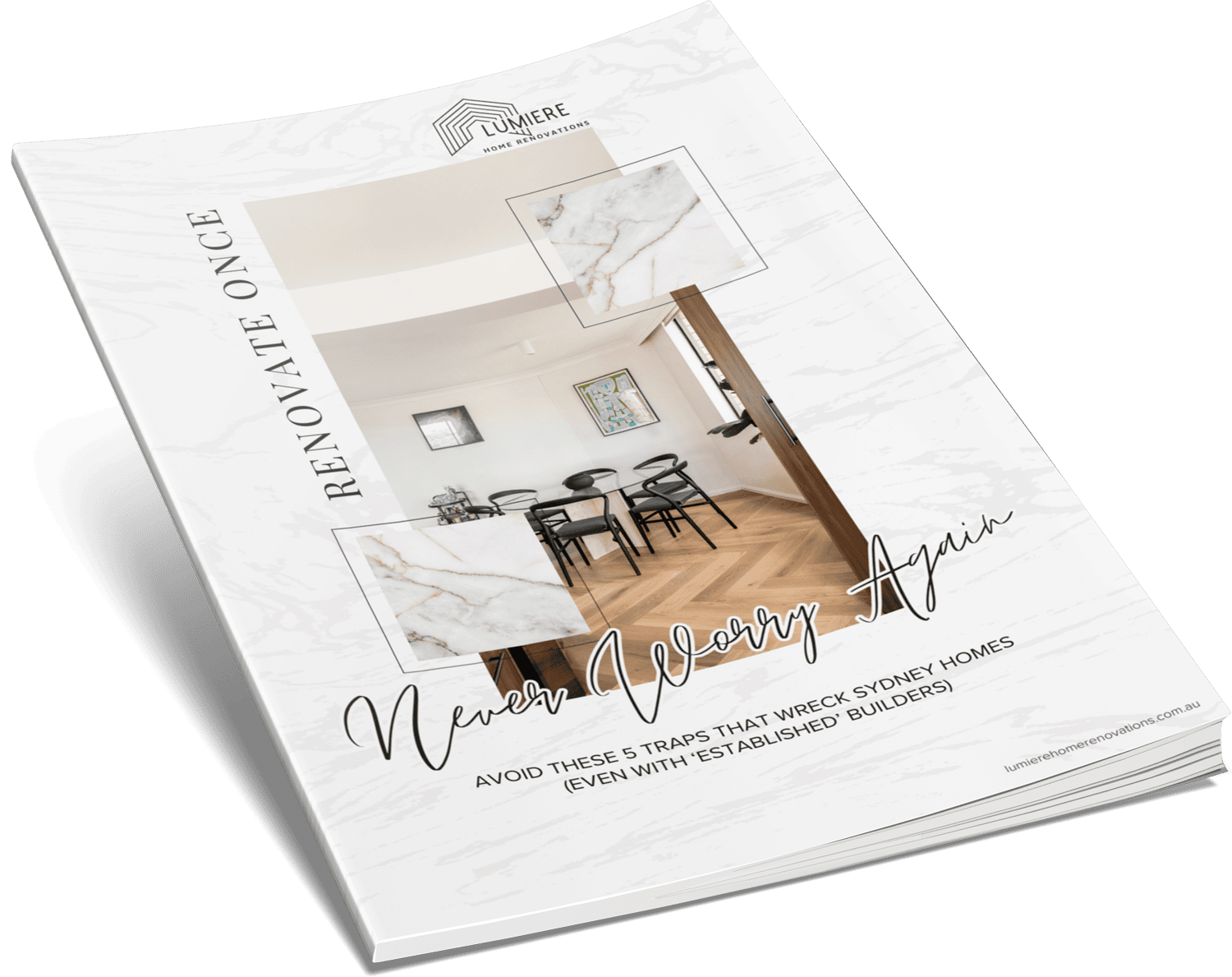
That’s why I put together a short, practical guide called Renovate Once, Never Worry Again: The 7 Traps That Wreck Sydney Homes (Even With ‘Good’ Builders).
It outlines the early questions and decision points that determine whether a renovation feels manageable – or overwhelming – and gives you a clear checklist to work through before construction begins.
If you want to feel confident you’re setting things up properly from the start, you can download the guide here.
For extra peace of mind beyond handover, vet your builder against the standards of the Housing Industry Association and the Association of Professional Builders before you sign.